The argument that finally broke me wasn't mine. It was my eleven-year-old's, and it had the kind of plain logic that's hard to wave off. We were driving home from the skatepark — a forty-minute round trip we were making four times a week — and he asked, with no malice, why we didn't just have a ramp at home. I gave him the standard answers. Money. Space. The HOA. He nodded the way kids do when they've stopped listening, and asked if he could have the aux.
I started looking that night. I expected to spend an evening confirming what I already believed: that a real backyard half-pipe was either a fantasy or a six-figure custom build. What I found instead was a small, surprisingly populated category of flat-pack ramp companies — most of them family operations — selling complete half-pipe kits in the four to twelve thousand dollar range. The kits arrived on a single pallet. You bolted them together on a weekend. They were, depending on whom you asked, either the best money you'd ever spend or a $7,000 lesson in why you should have just kept driving to the park.
I bought one in February. This is what happened.
The Shortlist
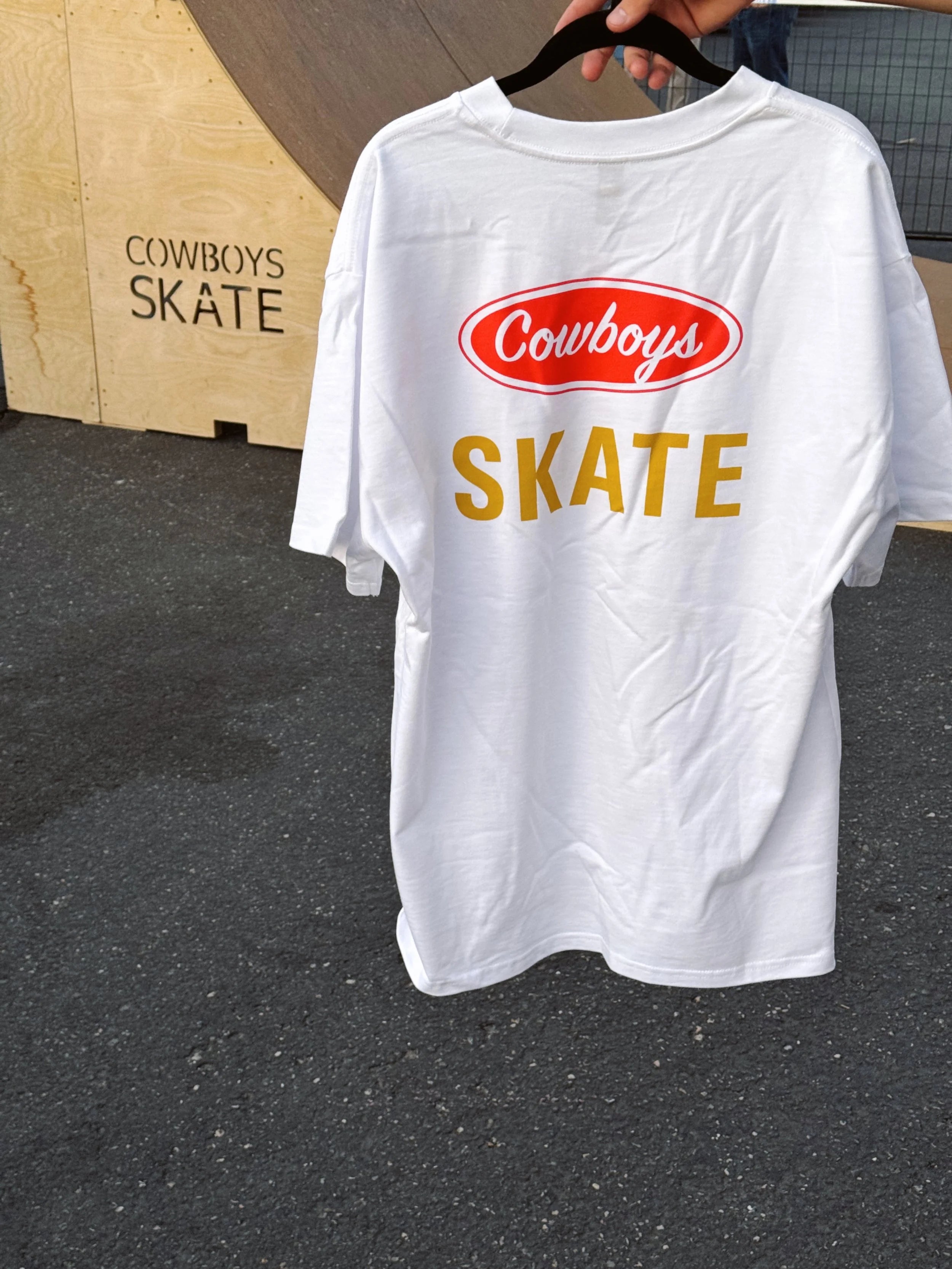
Three companies kept coming up. I'm not going to name the two I didn't choose, because nothing they did was wrong; they're both well-reviewed shops. What I will say is what the third one did differently — Cowboys Skate, out of Provo, Utah — and why that's the one I bought.
- Flat-pack, in one pallet. The other two shipped on multiple pallets or in pre-built sections you needed a freight liftgate to move. Cowboys ships the entire 8' kit in one stack of pre-cut, labeled pieces.
- Modular widths. 8', 12', and 16' versions of the same half-pipe, with extension kits sold separately. If we ever move or my kid grows out of an 8', the structure isn't a teardown — it's an upgrade.
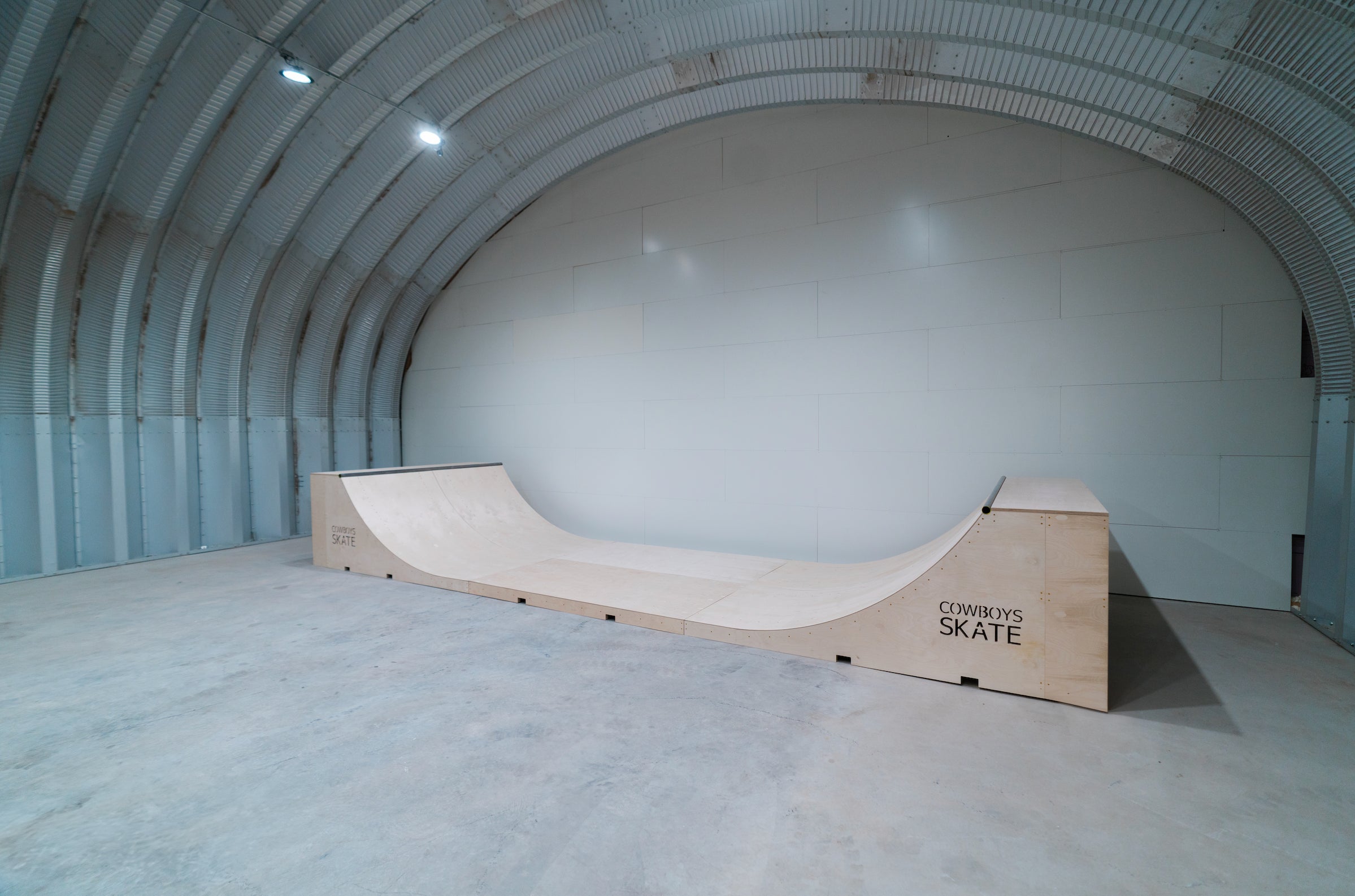
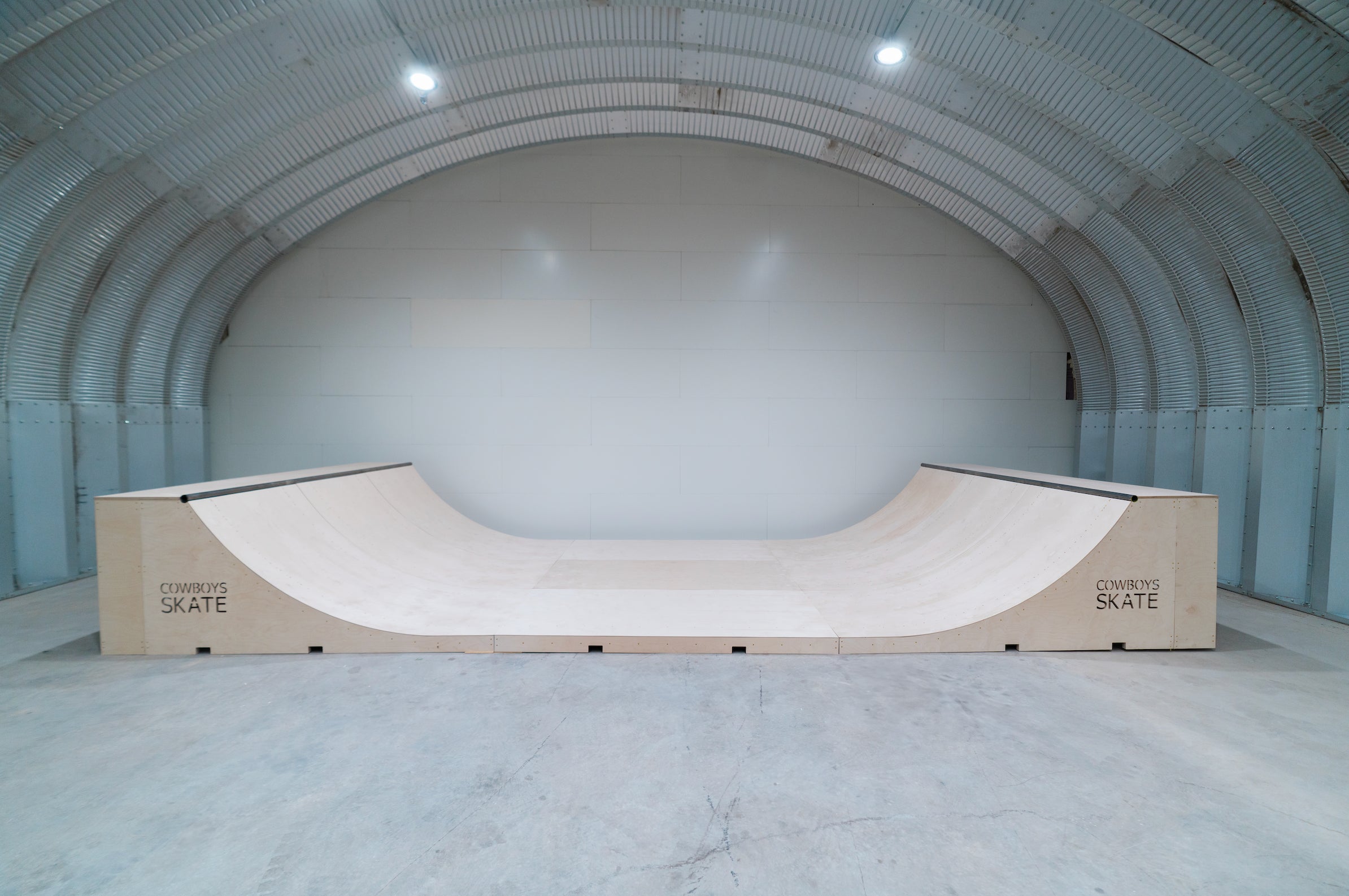
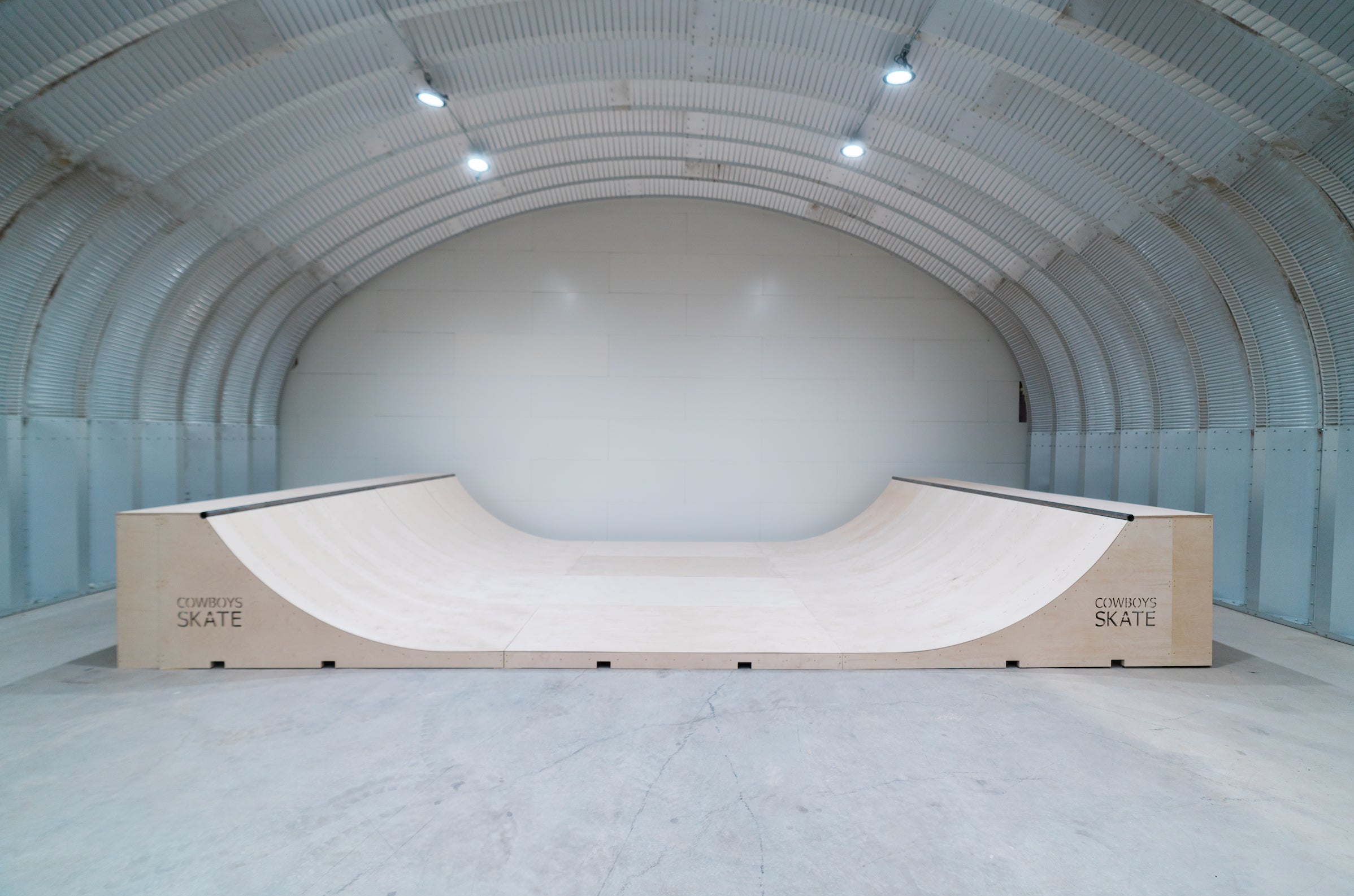
- The build itself. Two layers of 11-ply baltic birch on a steel-reinforced frame, Skatelite top sheet, sealed-bearing copers. None of that is unique in the industry, but on the specs sheets it's where the others got vague and Cowboys got specific.
It also helped, candidly, that the company is small enough that the person who answered the phone before I bought turned out to be the same person who built the ramp. That's not a metric you can put on a spreadsheet, but it's the one I kept thinking about.
Width 8'. Transition height 3.5'. Weight ~640 lbs assembled. Materials: 11-ply baltic birch, Skatelite riding surface, steel-reinforced 2x6 frame. Ships free in 1 pallet. Build time: 3–6 hours, two people. $7,250.
It arrives the way furniture arrives. Then you remember it isn't furniture.
The pallet showed up on a Tuesday morning, dropped by a freight driver who was clearly used to people not knowing what to do with a pallet. I'd cleared a flat patch of yard. I'd watched the assembly video twice. I had not, until the moment I was looking at it, fully internalized what 640 pounds of pre-cut plywood and steel actually looks like in your driveway.
Eleven boxes. Each one labeled. The labels matter — they're keyed to the assembly sheet, so when the directions say "Part 4-A," there's a 4-A sticker on a piece of plywood waiting for you. That sounds obvious. It is not obvious. The first ramp company I almost ordered from would have shipped me a pile of unlabeled plywood and a PDF.
I stared at it for an hour. I made coffee. I started.
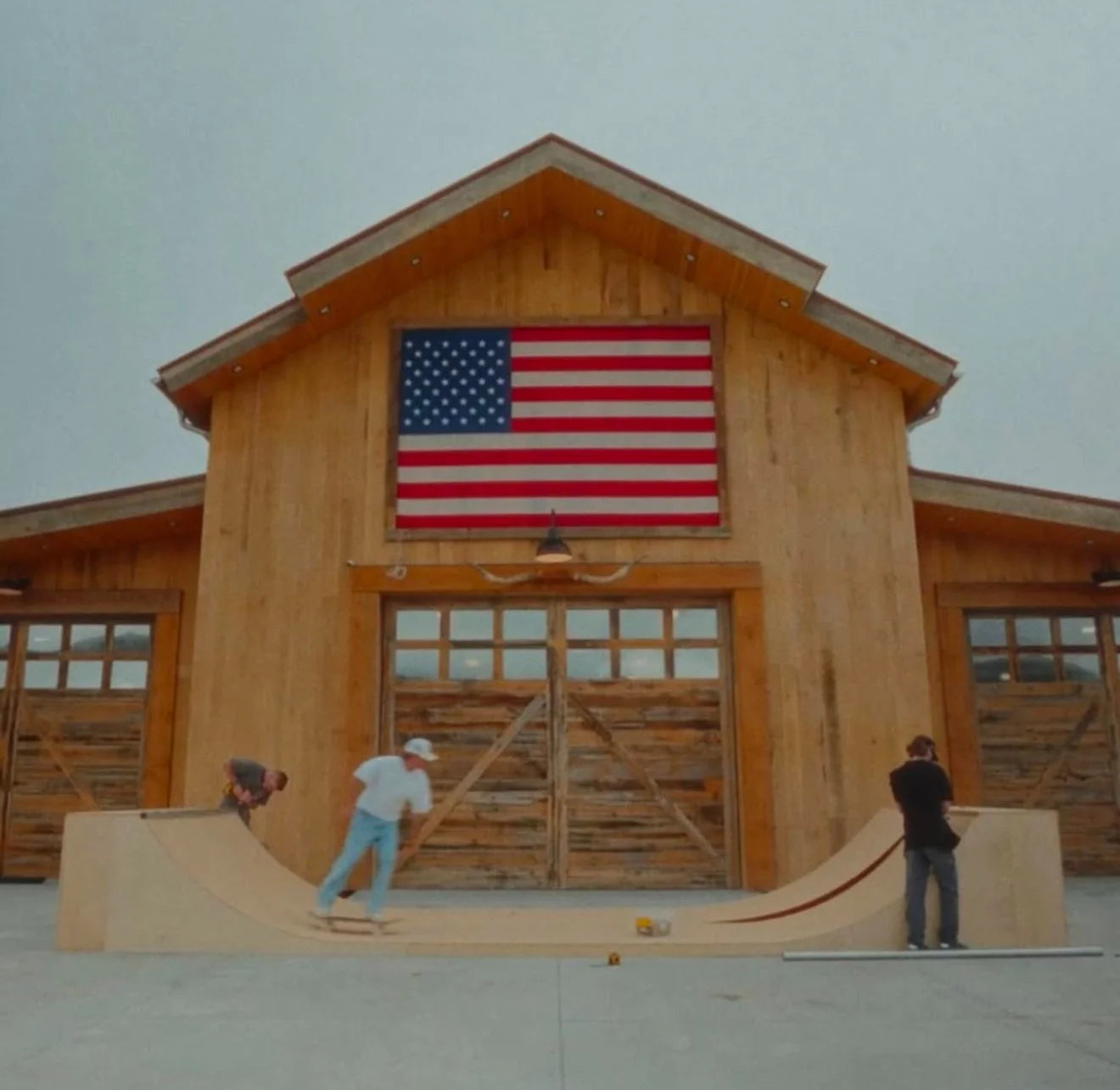
Three hours in, you stop checking the directions.
I am not handy. Let me be clear about this. I own a drill because someone gave me one. Most of my home repairs end with me calling a real human. I went into this build assuming it would take a full weekend, that I would get something visibly wrong, and that I would, at some point, swear loudly enough that a neighbor would walk over.
None of that happened. My buddy Reid came over on Saturday morning. We started at nine. By noon we had the frame built and the transitions standing. By three we were screwing the Skatelite top sheet down. Total working time, conservatively: five hours. We took a long lunch.
The thing I didn't expect: how much of the build is just bolting together obvious pieces in an obvious order. The transitions arrive pre-cut and pre-radiused. You don't measure anything. You don't cut anything. The hardest cognitive lift is keeping the screws organized — they come in three sizes, and Cowboys puts them in three labeled bags, and even I managed to not screw it up.
The platform up top is one of the better design decisions. It's wide enough to actually stand on with a board in one hand — a bigger deal than it sounds, because the cheaper ramps I considered have platforms so narrow they're basically a perch.
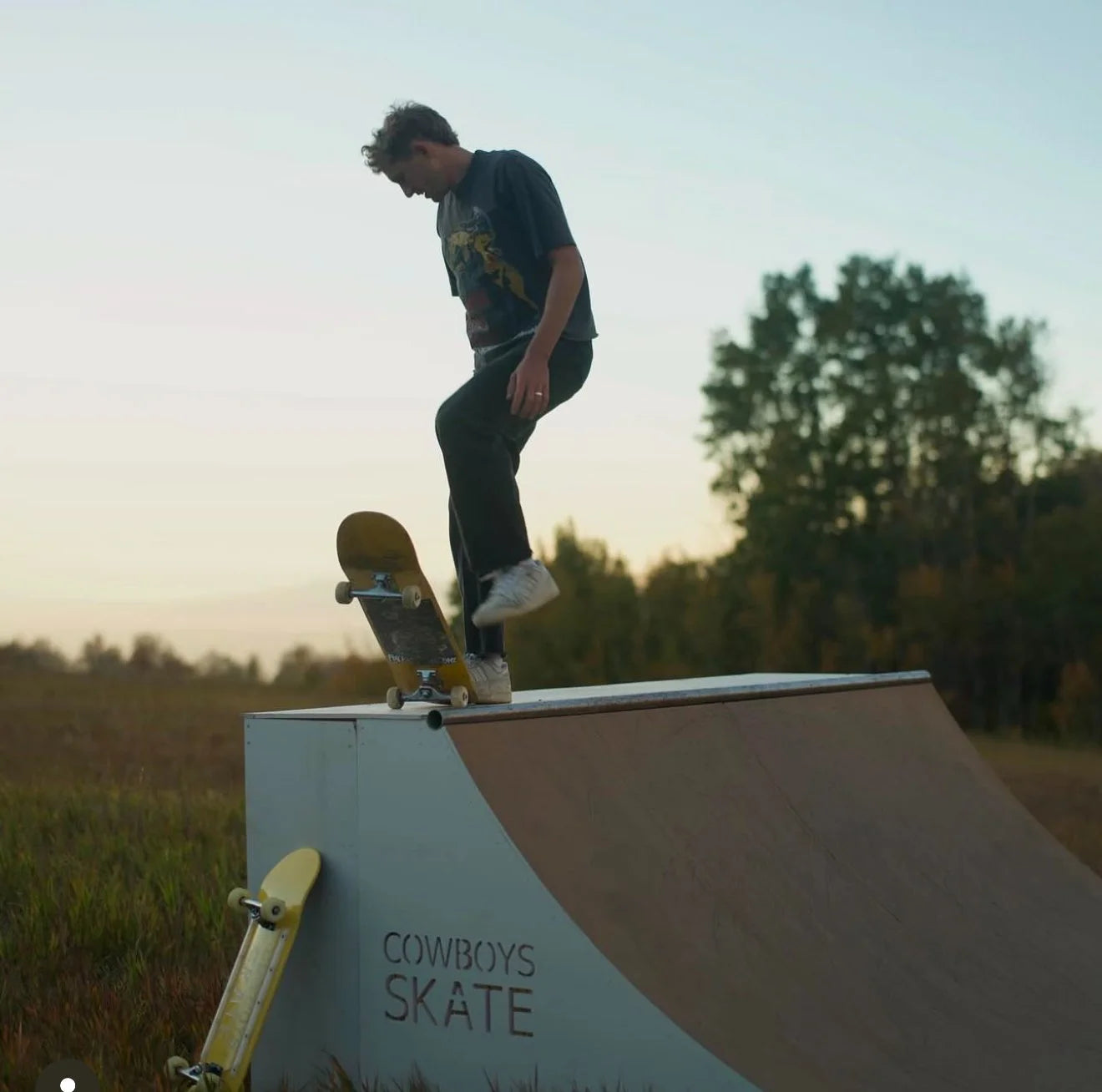
The 8' Wide Half-Pipe
Free shipping in one pallet. Three to six hours, two people, no special tools. The model in this review.
The first time my kid landed a drop-in, I forgot I'd spent $7,000.
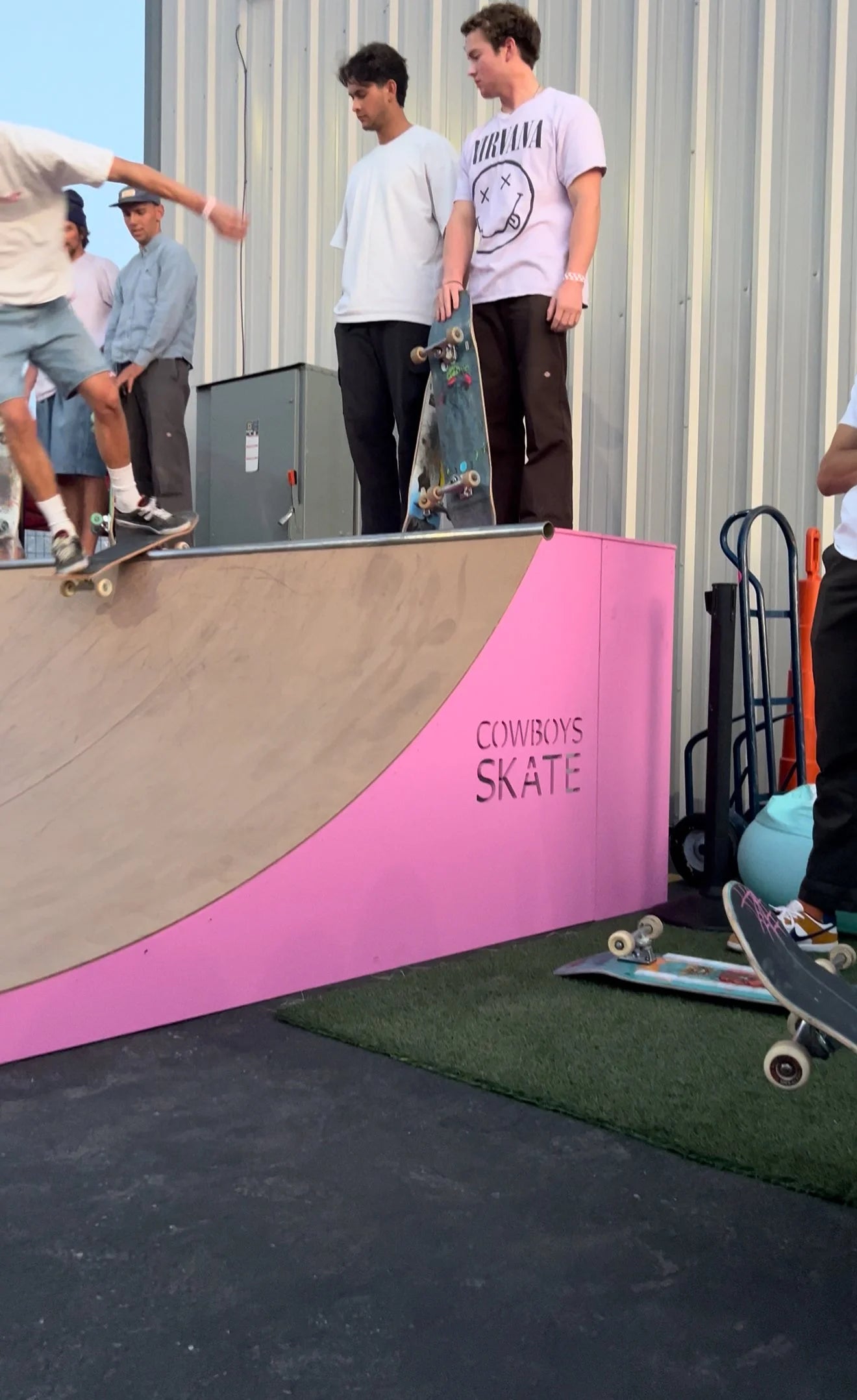
For the first week we used the ramp the way most people probably use it for the first week — which is to say, badly, and with too much enthusiasm. My son climbed up before the Skatelite was even fully cured and tried to drop in. He didn't make it. He did make a sound I'd describe as "nervous excitement." He went up again. He made it the third time.
I'd been worried, honestly, that the ramp would feel cheap once you actually rode it. It does not. Skatelite has a particular sound — a hard, dense thock under the wheels — and once we'd ridden it a few times the difference between this and the rough plywood DIY ramps I grew up on was not subtle. It rolls fast. The transitions are even on both sides. The copers don't catch your trucks. It feels, for lack of a less clichéd word, professional.
Two friends came over that weekend. One of them is genuinely good — has been skating since he was nine. He got on it for ten minutes, came down, and said, with the surprised flatness of someone who'd assumed he was about to do me a polite favor, "this is actually the real thing."
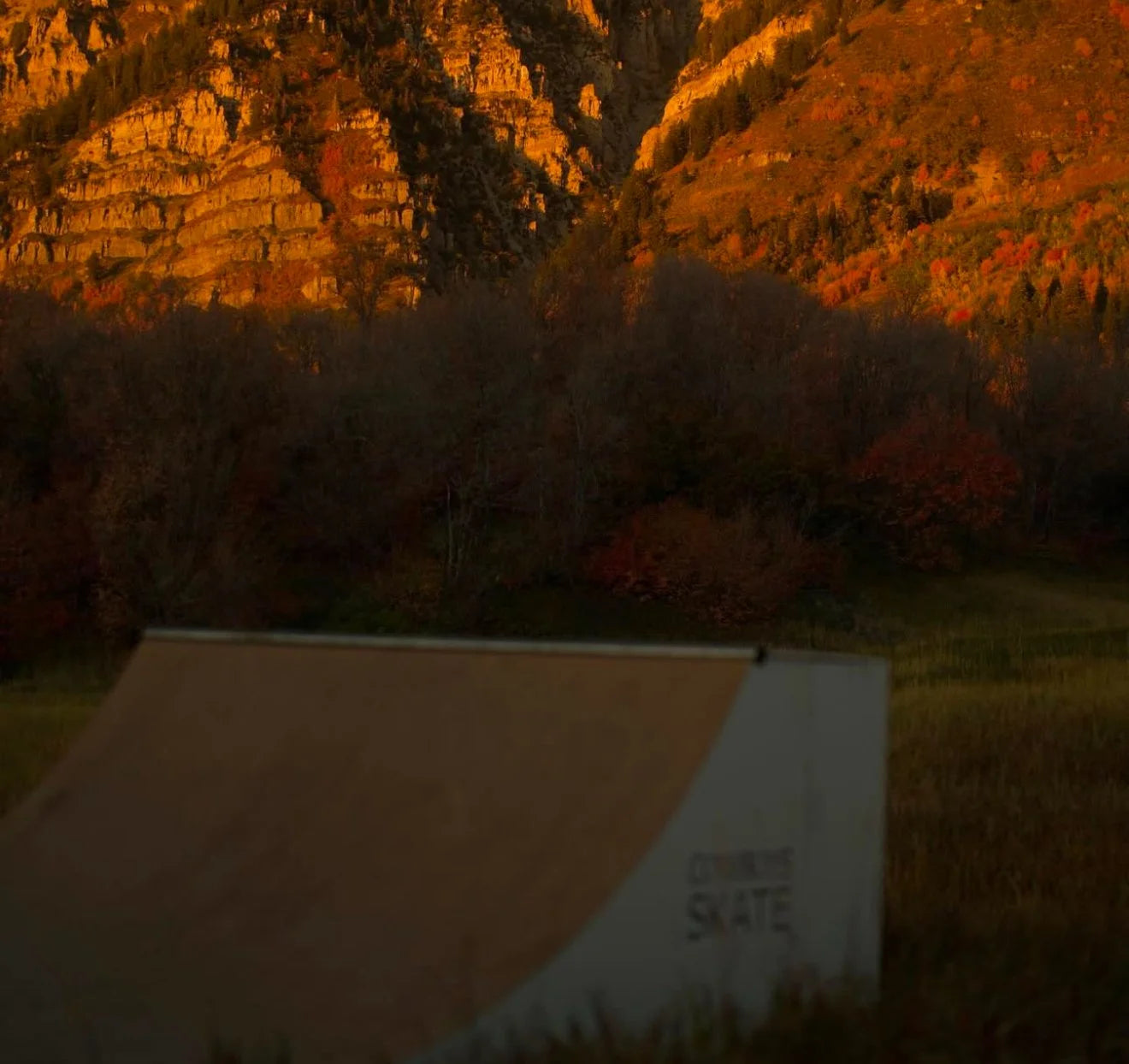
By the end of month one, we had stopped going to the skatepark.
This was the part I hadn't planned for. The math I'd done in my head was about cost-per-trip — that if we used the ramp instead of driving, we'd amortize the price over a year or two of saved gas and saved time. What actually happened was different and, in retrospect, obvious. We stopped going to the skatepark not because of the math. We stopped going because the ramp was right there.
The kids went out before school. They went out after school. They went out at dusk, when the light is the kind of orange that makes a backyard look like a movie. My son was getting in three sessions a day in the time he used to get in three sessions a week. The progress was visible inside of three weeks: drop-ins were automatic, axle stalls were getting cleaner, he was starting to attempt the kind of things you only attempt when you've stopped being afraid of the ramp.
Before the ramp: 4 trips per week to the skatepark, ~40 minutes round trip = 160 minutes / week of driving. After: 0. That's about 11 hours a month of driving I got back. I don't say that to be dramatic about parenting. I say it because I wasn't expecting it, and it's the part I'd most want a buyer to know.
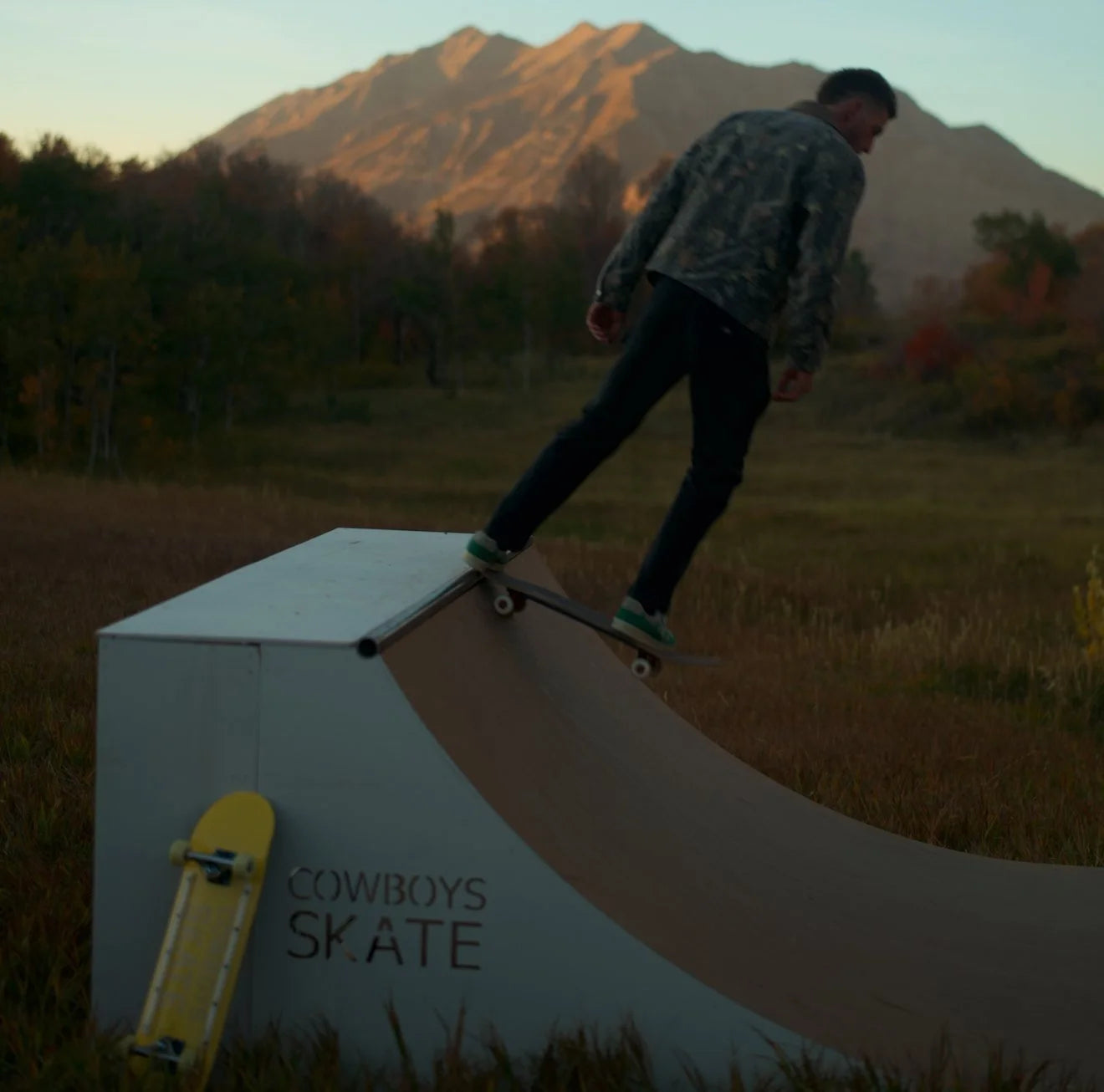
Start with the 8'. You can extend it later.
Modular construction means an 8' isn't a teardown if you outgrow it — extension kits widen it to 12' or 16'. Most buyers start here.
The ramp belongs to the kids in our neighborhood now.
I assumed the ramp would be ours. By the end of month two, that assumption looked naive. There are now four kids in our cul-de-sac who skate it on a regular basis. Three of them did not skate before. One of them is a girl from two houses down, eight years old, who showed up wearing pads her older brother grew out of and asked, very seriously, if she could practice on the flat at the bottom for a while before trying to go up.
What I'm describing is, in the parenting language of our particular suburb, a community asset. I wasn't trying to build one. I built a half-pipe for my kid. The community asset is the unintended consequence, and it's the part I would have laughed at if you'd told me about it on Day One.
I will note: the ramp has held up. Sixty days of multi-kid daily use, two snowstorms, a hailstorm, and one episode where I forgot the cover. The Skatelite has not delaminated. The plywood has not warped. The copers have not loosened. There is one screw on the back deck that I retorqued last week. That is the only maintenance, of any kind, that I have done.
It earned its keep faster than I expected. It will keep earning it.
I don't know how to write a verdict on a $7,250 backyard half-pipe that doesn't sound like an advertisement, because the conclusion I came to is the same conclusion the company hopes you come to. Here's what I can offer, with as much intellectual honesty as I can:
The ramp works. The ramp shipped on schedule. The ramp built in about a third of the time I'd budgeted. The ramp is being used three times a day, by my own child and several others, and it shows zero signs of wearing out. I have been more disappointed by $200 espresso machines.
I'm not going to pretend $7,250 is a small amount of money. It isn't. For us — a household where skateboarding has gone from an activity to a daily ritual — it works out to about $80 a week if we use it for two years, $40 if we use it for four. The local skatepark is technically free. It is also forty minutes round-trip and full of teenagers vaping in the bowl.
If you're on the fence: I was on the fence. I am not anymore.
90 DAYS
Who This Is Right For
- Parents of kids who already skate and are visiting a park more than once a week.
- Adult skaters with backyard space who'd ride more if they didn't have to drive to ride.
- Households that have flirted with a DIY build and quietly realized they don't have the time, the tools, or the carpentry stomach for it.
- Buyers who want a real product and not a project.
Who This Isn't For
- Anyone who skates twice a year. Buy a board, drive to the park.
- Households without ~12'×16' of flat outdoor space.
- Buyers who want to customize their build from scratch — that's a different category, and Cowboys isn't trying to compete with custom builders.
The 8' Wide Half-Pipe — $7,250
Designed and built in Provo, Utah. Free shipping. One pallet. Three to six hours of assembly. Read the spec, see the photos, and order on the Cowboys Skate site.